What Is TMJ Disorder?
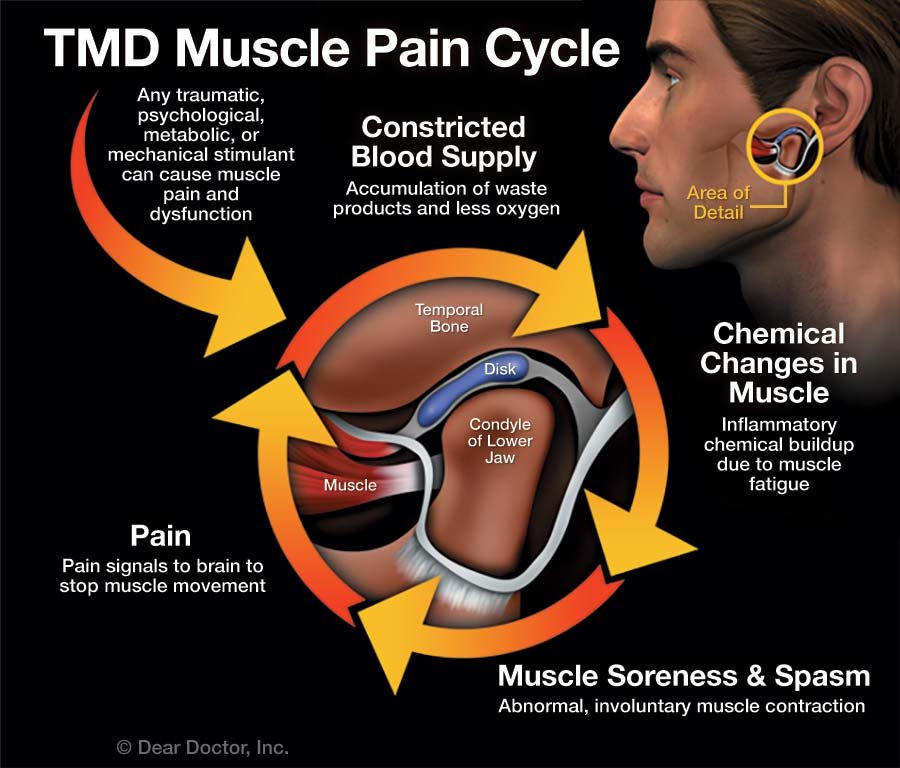
The temporomandibular joint is one of the most complex joints in the body. When the joint or the muscles around it stop working smoothly, the result is temporomandibular disorder (TMD) — pain plus limited jaw movement.
Because the jaw shares nerve pathways with pain-sensitive areas of the head, TMD often refers pain upward. That is why it is so commonly mistaken for tension headaches or migraines.
- Chronic jaw pain
- Clicking or popping sounds
- Headaches & migraines
- Earaches & tinnitus
- Lockjaw — trouble opening or closing
- Stress & teeth grinding (bruxism) — clenching, especially at night, strains the jaw muscles and joint.
- Misaligned bite or jaw — poor dental alignment or trauma disrupts joint function.
- Arthritis — osteoarthritis or rheumatoid arthritis can affect the joint.
- Injury or overuse — whiplash, heavy gum chewing or long dental appointments can trigger inflammation.
- Jaw pain or tenderness, especially near the ears
- Clicking, popping or locking when opening and closing
- Headaches, earaches or neck pain from muscle tension
- Difficulty chewing or discomfort while yawning
- Custom nightguards to prevent grinding and relieve pressure
- Bite adjustment to correct misalignment
- Gentle jaw exercises & physical therapy to improve mobility
- Stress management techniques to reduce clenching
Ignoring TMJ pain tends to make it worse. A thorough evaluation lets us build a tailored plan — relief is within reach.
Three types of TMJ pain
Identifying the type of pain guides targeted treatment — whether that is stress management, joint stabilisation, or addressing a hidden trigger. Tap any card for the detail.
1. Muscle Pain (Myofascial Pain)
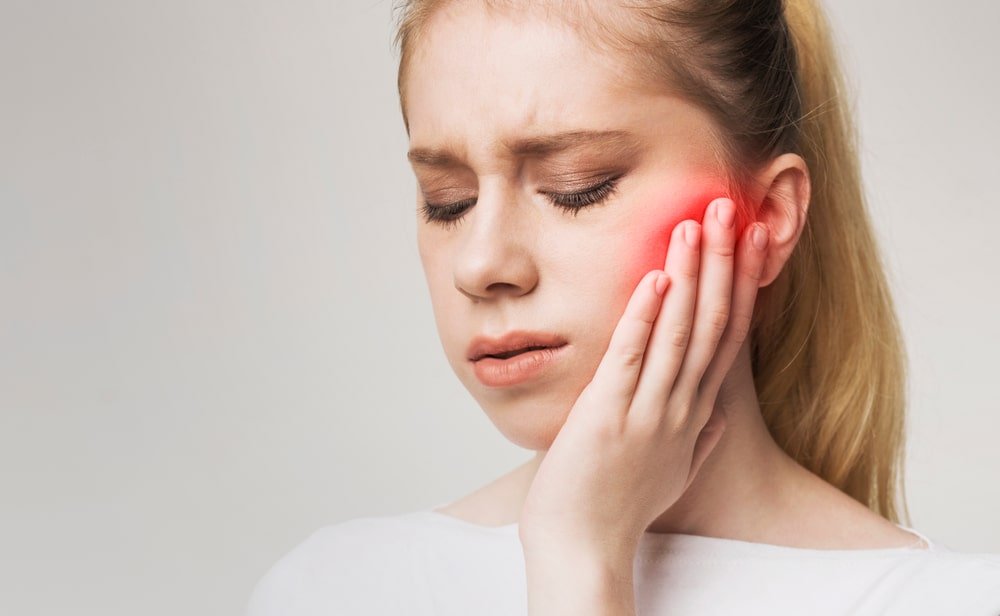
Overworked jaw muscles from clenching, grinding, stress or posture.
- Cause: overworked or strained jaw muscles due to clenching, grinding, stress or poor posture.
- Symptoms: dull ache in jaw and face, tenderness near the temples, difficulty opening wide.
- Relief: rest, heat or cold therapy, muscle relaxants, or a nightguard.
2. Joint Pain (Arthralgia/Arthritis)
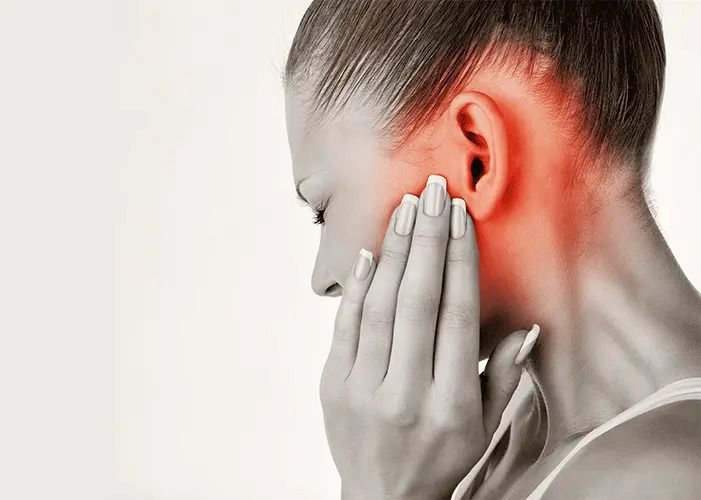
Inflammation or damage inside the joint itself.
- Cause: inflammation or damage to the joint — arthritis, injury or disc displacement.
- Symptoms: sharp pain near the ear, clicking or popping, limited jaw movement.
- Relief: anti-inflammatories, gentle exercises, or splint therapy.
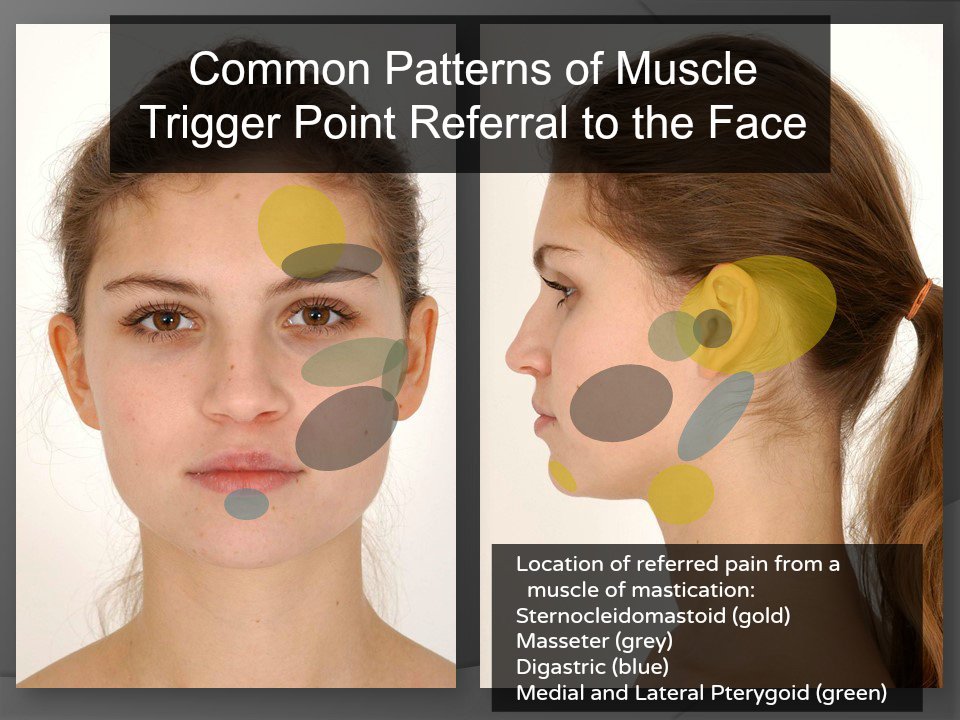
3. Referred Pain
Pain that starts elsewhere and radiates to the jaw.
- Cause: pain originating elsewhere — teeth, sinuses, neck or migraines — radiating to the jaw.
- Symptoms: confusing, widespread discomfort that mimics TMJ issues.
- Relief: treating the underlying cause, such as a sinus infection or dental problem.
What can you do?
BOTOX TREATMENT
How do Botulinum Toxin Type A injections work?

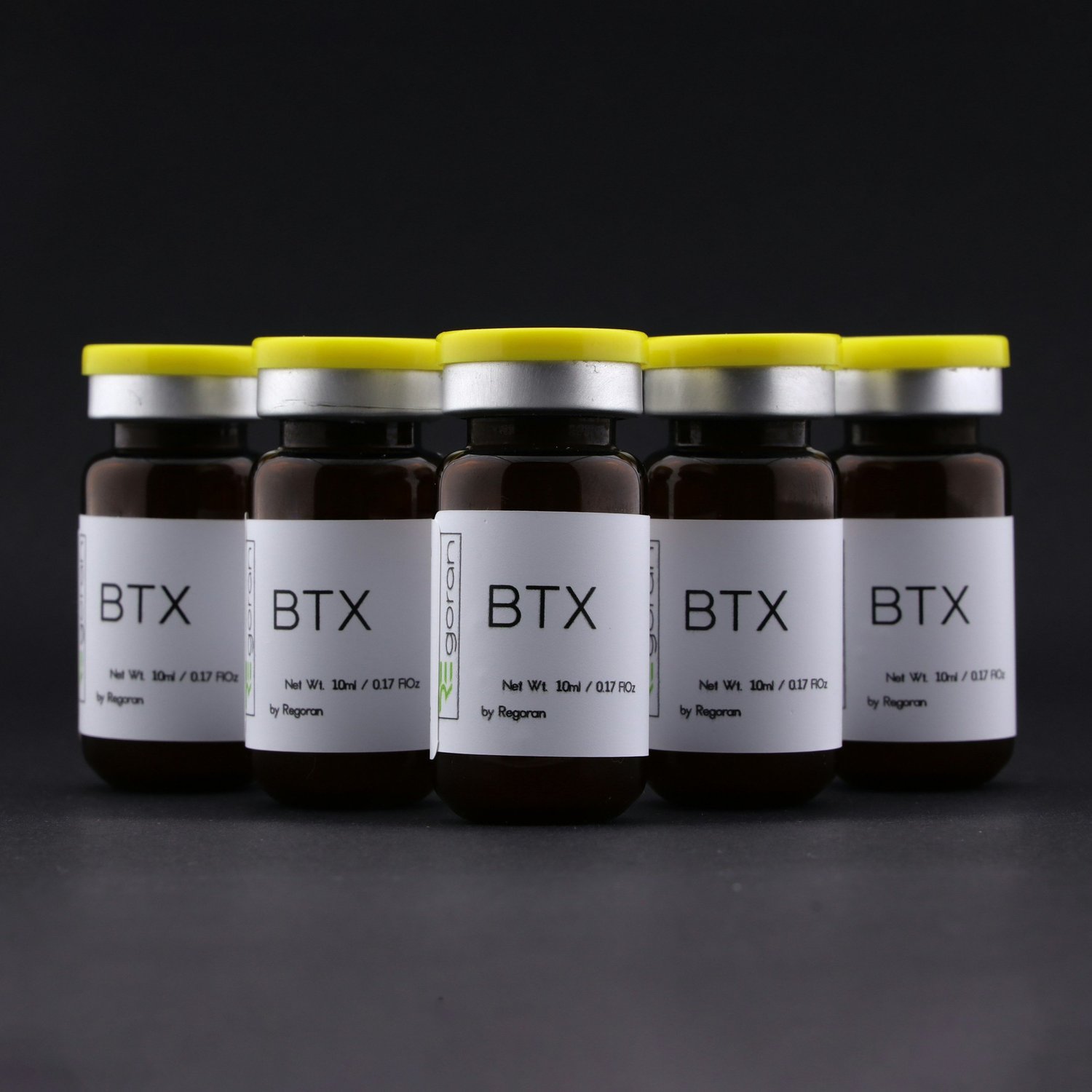
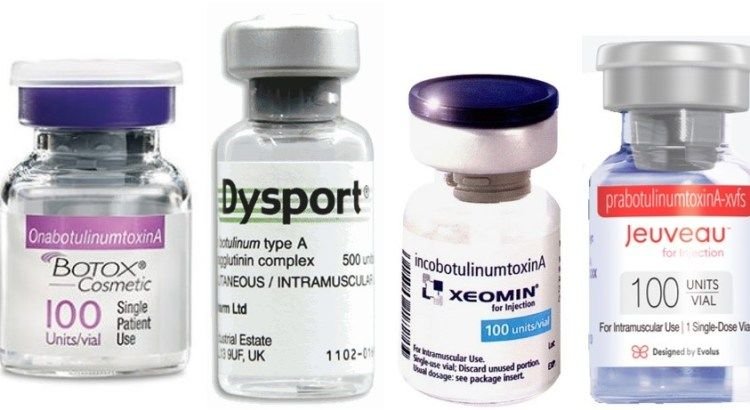
Before we break down the differences between Botox, Dysport, Jeuveau and Xeomin, it helps to understand what they are and how they work.
Botulinum toxin type A (BoNT) is the active ingredient in each product. Injected into a muscle, it reduces contraction — which in the jaw means less clenching force, and less muscle pain.
The result? Smoother skin for three to four months (or until it wears off).
Now that you know what Botox, Dysport, Jeuveau, and Xeomin have in common, it’s time to understand what makes them different — no matter how subtle the distinctions might be.
First and foremost, the four neurotoxins are made by different manufacturers, which leads to different costs, potencies, and formulations. While the active ingredient in each product is botulinum toxin type A, some also feature protein blends that may affect the diffusion and efficacy of the injection. Such subtleties are why it is important to find a provider who is well versed in the market.
Botox
FDA Approval: Botox was first approved by the FDA as a temporary aesthetic treatment to improve the appearance of frown lines between the eyebrows in April 2002. It has since been cleared to treat forehead lines and crow’s feet, too (in addition to all its “off label” uses). Botox was the first product of it’s kind. The Background: Botox, or onabotulinumtoxinA, is a product of Irish drugmaker Allergan, and it currently holds an estimated 80 percent of the BoNT-A injection market. With a molecular weight of 900 kDa, Allergan formulates botulinum toxin type A with protective proteins that a subset of patients may develop an antibody against over time, lessening the effectiveness of the treatment. The inactive ingredients in Botox® include human albumin (i.e. plasma proteins) and sodium chloride. There is also a therapeutic version of product that can be used to treat medical conditions like migraines, excessive sweating, and eye spasms (to name a few.
The Results: Botox is effective but not permanent. It takes about three to five days post-treatment for the results to appear (though it can take up to two weeks for the final effect to be visible), and it lasts about three to four months in most patients. The longevity depends on everything from the way a patient’s body metabolizes the product to the area being treated.
Dysport
FDA Approval: Dysport was first approved to treat frown lines in April 2009, and, like Botox, also has therapeutic uses to calm muscle spasticity. The Background: A product of Medicis Pharmaceutical, Dysport (a.k.a. abobotulinumtoxinA) is slightly less potent than Botox® due to its molecular weight. While both have the same 150 kDa of BoNT-A at their core, the weight of the protective proteins in Dysport® are not uniform like those in Botox. As a result, Dysport has a higher rate of diffusion, which makes it ideal for treating larger areas (think: foreheads) — though more product may be needed to achieve results. Nonetheless, the cost is generally comparable to Botox. Like Botox, it is formulated with human albumin, and Dysport also contains lactose and cow’s milk protein — making it unsuitable for patients with milk allergies.
The Results: While the effects of Dysport may show up sooner (within 24 hours) than Botox, some studies have shown that they may not last as long. The shorter lifespan could make it a good choice for patients who are unsure about whether they will like the results of BoNT-A injections.
Jeuveau
FDA Approval: The new kid on the block was approved exclusively for cosmetic use in February 2019. The Background: You may recall the splashy launch party that branded Jeuveau (i.e. prabotulinumtoxinA) as “#NEWTOX.” Maker Evolus is hoping the newbie will prove to be a worthy competitor to Botox, as they both carry a molecular weight of 900 kDa, are formulated with human albumin and sodium chloride, and offer similar results. But, with a price point 20 to 30 percent less than Botox and marketing campaigns largely targeted at millennials, it would appear Jeuveau is seeking to carve out its own patient niche.
The Results: Clinical data is limited due to the newness of the product, but trials have shown Jeuveau to have a similar safety and efficacy profile to Botox. Patients generally begin to see results in three to five days, and they last for three to six months.
Xeomin
FDA Approval: Xeomin was first approved by the FDA in 2010 for treating blepharospasm, or involuntary blinking, and cervical dystonia, an involuntary contraction of neck muscles. In 2015 it was approved for treating upper limb spasticity, and in 2018 it was approved for treating chronic sialorrhea. The Background: Xeomin® is made through a unique precision manufacturing process that isolates the therapeutic component of the molecule and removes the complexing/unnecessary proteins that don’t play an active role in treatment. Xeomin® is a uniquely purified neurotoxin. Studies have not been performed to determine whether the presence or absence of complexing/unnecessary proteins has a long-term effect on safety or efficacy.
The Results: Most patients begin to see their results in about four days, which is just slightly longer than with Botox, which offers signs of improvement within 72 hours. Both injectables last anywhere from three to six months, and you can opt to schedule another treatment when the first one wears off
What else can you do?
DENTAL MASSAGE THERAPY
If you suffer from TMD, jaw pain or chronic teeth grinding, dental massage therapy may help. It is a non-invasive, drug-free treatment that targets tight muscles in the jaw, face, neck and shoulders.
Gentle manual techniques performed by a trained therapist or dentist to:
- Relieve TMJ-related myalgia (muscle pain)
- Reduce spasms & tension in the masseter and temporalis
- Improve blood circulation to promote healing
- Release trigger points that drive headaches and facial pain
- Enhance jaw mobility for easier chewing and speaking
Myofascial release and intraoral massage can:
- Decrease muscle stiffness in the jaw and neck
- Lower cortisol levels, the stress hormone linked to clenching
- Stimulate lymphatic drainage to reduce swelling
- Improve range of motion in the joint
- Complement other treatments such as splints, Botox and physio
- Intraoral massage — targets inner cheek and jaw muscles for deep tension relief.
- External jaw & temple massage — reduces masseter and temporalis tightness.
- Neck & shoulder release — eases referred pain from poor posture.
- Acupressure & trigger point therapy — releases knots that radiate pain to the head.
- Drug-free pain management
- Non-invasive & low risk
- Fewer tension headaches & migraines
- Better sleep through less nighttime clenching
- Deeper relaxation and less stress-related jaw tension
This therapy may help if you experience:
- Chronic jaw soreness
- Clicking or popping when chewing
- Frequent tension headaches
- Limited mouth opening (lockjaw)
- Earaches without infection (referred TMJ pain)
- Acute pain: 1–2 sessions per week for 4–6 weeks
- Maintenance: monthly sessions to prevent tension building up
- Custom night guards to prevent grinding
- Physical therapy & jaw exercises
- Stress management such as meditation or yoga
- Botox for bruxism if muscle hyperactivity is severe
- Warm compress before massaging
- Circular pressure on the jaw joints, just below the ears
- Gentle chin tucks to relieve neck strain
- Guided tutorials — see the video library below
- Bite adjustment (occlusal therapy)
- TMJ splint or oral appliance
- Botox injections for muscle relaxation
SPLINT THERAPY
Splint Therapy for TMJ: A Non-Surgical Solution for Jaw Pain & Discomfort
If you have jaw pain, clicking or difficulty chewing, splint therapy offers a non-invasive, effective way to relieve discomfort and restore proper jaw function.
A TMJ splint (occlusal guard) is a custom-made appliance that:
- Repositions the jaw to reduce joint pressure
- Prevents grinding at night
- Relieves muscle tension in jaw, neck and shoulders
- Protects teeth from excessive wear
- Stabilisation splint — covers all teeth to relax jaw muscles.
- Repositioning splint — guides the jaw into proper alignment.
- Soft splint — flexible material for mild cases.
- Hard acrylic splint — durable, for severe TMJ.
- Diagnosis — we examine your jaw, bite and symptoms.
- Custom fabrication — impressions create a perfectly fitted splint.
- Adjustment period — usually worn at night, with minor tweaks.
- Follow-up visits — we monitor progress and optimise the fit.
- Non-surgical & reversible
- Reduces pain & inflammation
- Improves jaw mobility
- Prevents further tooth damage
- Custom-fit for comfort
Most patients notice improvement within weeks, though long-term wear of 3–6 months may be needed for lasting relief.
No. Night guards only protect teeth from grinding, while TMJ splints actively correct jaw alignment.
- Physical therapy (jaw exercises)
- Botox injections for muscle relaxation
- Laser therapy to reduce inflammation
- Surgery, in rare cases
VIDEO LIBRARY
Exercises & treatment videos
Every TMJ video in one place — a look at treatment in our clinic, plus two guided routines you can follow at home.
TMJ pain treatment at Le Dentistry
Jaw pain exercises for teeth grinding
Massage & stretches for jaw pain
TMD QUESTIONNAIRE
Screen your jaw pain in three minutes
The same three calculators published with the Royal College of Surgeons of England (FDS) and NHS England GIRFT 2024 TMD guideline: a TMD screen, a distress screen, and a pain intensity score. Nothing is stored or sent — the results stay on your screen, so note them down and bring them to your appointment.
Screening
3Q/TMD — screening for temporomandibular disorder
Three validated questions used to flag people who may benefit from a full TMD assessment.
Do you have pain in your temple, face, jaw, or jaw joint once a week or more?
Do you have pain once a week or more when you open your mouth or chew?
Does your jaw lock or become stuck once a week or more?
Answer all three questions to see a result
Lövgren A, et al. Validity of three screening questions (3Q/TMD) in relation to the DC/TMD. J Oral Rehabil. 2016;43(10):729–36.
Psychosocial distress
PHQ-4 — anxiety & low mood screen
Over the past 2 weeks, how often have you been bothered by these problems?
Feeling nervous, anxious or on edge
Not being able to stop or control worrying
Feeling down, depressed, or hopeless
Little interest or pleasure in doing things
Answer all four items to see a result
Löwe B, et al. J Affect Disord. 2010;122(1–2):86–95. Kroenke K, et al. Psychosomatics. 2009;50(6):613–21.
Pain intensity
Characteristic Pain Intensity (CPI)
Rate your pain from 0 (“no pain”) to 10 (“pain as bad as could be”). Repeat after treatment to track your progress.
How would you rate your mouth and/or face pain AT THE PRESENT TIME, that is right now?
In the PAST MONTH, how intense was your WORST mouth and/or face pain?
In the PAST MONTH, on AVERAGE, how intense was your mouth and/or face pain? (That is, your usual pain at times you were experiencing pain.)
Rate all three items to see a result
Von Korff M, et al. Grading the severity of chronic pain. Pain. 1992;50(2):133–49.
These calculators mirror the screening tools published with the 2024 guideline Management of painful Temporomandibular disorder in adults (NHS England GIRFT and the Faculty of Dental Surgery, Royal College of Surgeons of England). They indicate risk and severity only — they are not a diagnosis. Show your results to your dentist or doctor for evaluation.
Source: RCS England TMD online calculator and screening tool
Book a TMJ Massage Consultation Today!
If jaw pain, headaches or teeth grinding disrupt your day, we can help you find the cause and the right treatment.
Book a consultation